Showing posts with label Black history month. Show all posts

Wednesday, February 29, 2012

Black and Latino in the U.S.

What does it mean to be black and Latino in the U.S.? Featuring interviews with Latino actors Laz Alonso (Avatar, Jumping the Broom), Tatyana Ali (Fresh Prince of Bel Air), Gina Torres (Suits, Hercules: The Legendary Journeys) and Judy Reyes (Scrubs), musicians Christina Milian ("Dip it Low") and Kat DeLuna ("Whine Up"), and journalist Soledad O'Brien (CNN), among many others.

LOS ANGELES, Jan. 11, 2012 /PRNewswire/ -- mun2, the leading bicultural cable network in the US, explores how Latinos are changing the way America understands race and ethnicity.  Drawing from the uniquely American stories of Latino celebrities, musicians and journalists of African heritage including singer/actress Christina Milian (American Pie), actor Laz Alonso (Avatar), actress Tatyana Ali (Fresh Prince of Bel Air), and MSNBC journalist Soledad O'Brien, the web original explores an important yet often misrepresented segment of the US Latino population.  "Black and Latino" debuts today, (January 11th) on mun2.tv/blackandlatino

"As part of our commitment to reflecting the diversity and dynamism of US Latino identity, we are honored to share these provocative and poignant stories of celebrities who live and work at the intersection of so many cultures," says Jose Marquez, VP Interactive Strategy, Telemundo and mun2.
Other interviews with American tastemakers include "The Voice" season one winner Javier Colon, actresses Gina Torres (The Matrix) and Judy Reyes (Scrubs), pop singer Kat de Luna, magazine editor Mimi Valdes and music video director Jessy Terrero (50 Cent's The New Breed), who relate their own previously untold experiences of working through the unreasonable constraints of stereotypes in both Hispanic and mainstream culture.  The short, made-for-web documentary also features man-on-the-street interviews with Generation Y Latinos who provide a refreshingly nuanced understanding of race and identity in contemporary America. 
"Black and Latino" marks the latest mun2.tv original.  The award-winning site received an Imagen award in 2011 in the Best Web Series category for an original online program about Mexican American culture titled "Chismex," and has become the leading platform for young Latinos to define and celebrate their identity.

Quotes from "Black and Latino" special:
Jessy Terrero: I always felt like we were black people who spoke Spanish.
Laz Alonso: It was kind of like a dual existence because outside of my house I would be just an African American guy.  But once I got home, I was Cuban again. Judy Reyes: I would get really positive reactions in auditions for both African American and Latina parts but I didn't look Latina enough.
Gina Torres: When I became an actress, I quickly realized that the world liked their Latinas to look Italian, not like me and so I wasn't going up for Latina parts, I was going up for African American parts.   Mimi Valdes: My grandmother would tell me stories about how she was discriminated even among members of her own family...for being a Black Latina.

About mun2:
mun2 (moon-dos) is the lifestyle Hispanic cable network for today's generation YLA (Young Latino Americans) 18-34. As the leading bicultural network that amplifies the Latino experience, mun2 is culturally relevant and uniquely American.  From reality to music, on-air to digital, mun2 creates original content across a multi-screen platform.  As the only nationally measured bicultural cable network by Nielsen, mun2 has an increased distribution to over 36 million households, and is a part of Telemundo Media, a division of NBCUniversal.

Watch the full video here:
http://www.mun2.tv/candy/original/black-and-latino-tatyana-ali-extended-interview

~~~~~~~~~~~~~~~~~~~~~~~~~~~~~~~~~~~~~~~~~~~~~~~~~~~~~~~~~~~~~~~~~~
If you are receiving this correspondence via email and are not able to view the accompanying video please visit http://www.blackimprovementmedia.blogspot.com to watch the video described in the above text. The views expressed in the media presented on this site are not necessarily the views and opinions of the Imani Foundation, our members, staff, or sponsors. Find us on FACEBOOK under the name "The Black Improvement Movement". Subscribe to our posts by emailing imanifoundation-subscribe@yahoogroups.com .

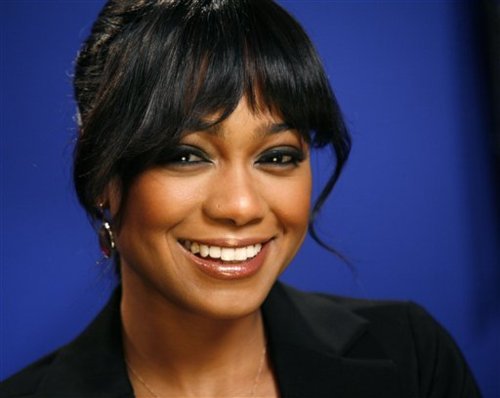
Black and Latina - Tatyana Ali

Tatyana Ali on being a Black Latina

Photo:  AP
Tatyana Ali is more than the sweet actress you remember from her days as Ashley on The Fresh Prince of Bel-Air: she’s a recording artist, dedicated political activist and star of a new show, Love that Girl.  We recently chatted with the talented and beautiful Harvard grad, who broke down what it means for her to be a Black Latina in Hollywood and how no matter what, she’ll always love tostones.

NBC Latino: Does Hollywood type cast you?

I think that Hollywood does typecast. It happens on so many different levels. Whether you’re Latina or not, it’s about race, culture, or about personality. I’m always type cast as the sweet girl, or the smart girl – which means you won’t be cast as the sexy role. However, Hollywood does its best work when you make people question what they know. Those are the best TV shows, projects and films, where you create a sense of empathy in the audience for a character that they would probably never identity with. So the trick is to defy as many of those as possible, whether it’s culturally, racially, personality type, or sexually. That’s what I’m concerned with as a dark brown girl.

NBC Latino: You are like several other young Hollywood stars, part of the melting pot. Your mom is Panamanian, your dad is Trinidadian.  In a world of categories, you defy categorization. How do you define yourself?
I think of myself as Afro-Caribbean. That means that I’m a black woman, especially in the U.S. because that’s how we’re seen. Afro-Caribbean is broad enough that I can include all the influences in my life, like music, calypso, and speaking loudly and using my hands in speech. And also I think for me, it’s about the way I was brought up, with hospitality, generosity and kindness. There’s warmth in Panama in and in Trinidad. People welcome you in the homes, and if you’re out of town, people will share their lives with you and immerse you in your world. That’s something that I was raised with and that’s how I try to live in my daily life.

NBC Latino: Did you grow up with any specific cultural traditions that made you feel Latina?
Oh yeah. We’re a dancing family. Music is a huge part of our lives. Every time my family gets together for a cook out, it begins and ends with music. I love all kinds of music, and here’s the thing: with salsa dancing, I’m about a medium in skill. I’ve never taken classes or anything, but if I’ve got a partner that can lead, I can do it. One thing that I love about the culture is that if you’re in a salsa club, you can dance with as many people you like. It’s a given you dance with one guy, for one song, or two, and it another asks you t. every time you’re dancing with someone, it’s a completely different experience. Being able to follow can be a bit challenging, but you can twirl and take over when you want.

NBC Latino: How do you keep culture alive?
Through food, culture and music. I don’t cook as much as I’d like to, but when I do, I cook what I grew up: tostones, rice and gandules. And sometimes I love having Trinidadian food to honor my dad’s side – dishes like curry fish or curry chicken. When my friends come over my house, they know it’s going to be something ethnic!

NBC Latino: What message do you hope to pass onto to little girls, whose backgrounds might be similar to your own?
Don’t hesitate to talk and tell people who you are. A lot of times it’s so much easier to fit into other peoples boxes. To get you far in this life though, you need your real identity, the real you. What I’m finding now at this age in my life, is that I’m more willing to speak up and say ‘Oh no, it’s actually like this.’  When I do that, it’s like a whole world of opportunity opens up. When you take the courage to stand up for yourself and define who you are, other people will open up to you. Deep inside, everyone’s longing to be themselves.
Check out Tatyana’s sit down with Mun2, where she chats about being a Black Latina, here.
-NINA TERRERO, NBC LATINO STAFF

 Watch the video and full interview here:


http://www.mun2.tv/candy/original/black-and-latino-tatyana-ali-extended-interview

~~~~~~~~~~~~~~~~~~~~~~~~~~~~~~~~~~~~~~~~~~~~~~~~~~~~~~~~~~~~
If you are receiving this correspondence via email and are not able to view the accompanying video please visit http://www.blackimprovementmedia.blogspot.com to watch the video described in the above text. The views expressed in the media presented on this site are not necessarily the views and opinions of the Imani Foundation, our members, staff, or sponsors. Find us on FACEBOOK under the name "The Black Improvement Movement". Subscribe to our posts by emailing imanifoundation-subscribe@yahoogroups.com .
Wednesday, February 22, 2012

A Dreamer's Dream - Tyrese Gibson, Blair Underwood & Jill Scott

The Honorable Dr. and Mrs. Martin Luther King speak from the heavens.

Direct link: http://raphd.com/vid/14455
If you are receiving this correspondence via email and are not able to view the accompanying video please visit http://www.blackimprovementmedia.blogspot.com to watch the video described in the above text or visit http://raphd.com/vid/14455. The views expressed in the media presented on this site are not necessarily the views and opinions of the Imani Foundation, our members, staff, or sponsors. Find us on FACEBOOK under the name "The Black Improvement Movement". Subscribe to our posts by emailing imanifoundation-subscribe@yahoogroups.com .

Monday, August 2, 2010

A Panther in Africa

The tumultuous period known as "the '60s" continues to cast a long shadow across the contemporary American experience. Few, if any, of the seminal conflicts that drove the era — civil rights, war and peace, racism, women's liberation — have been fully resolved today. Nor have all the key players in that national drama been tried, pardoned, punished, vindicated, or even allowed to come home.

A Panther in Africa
, a new documentary having its national broadcast premiere on public television's POV series, is the story of Pete O'Neal, one of the last exiles from the time of Black Power, when young rebels advocated black pride, unity, community service and sometimes, violence. Facing gun charges in Kansas City in 1970, O'Neal fled to Algeria, where he joined other Panther exiles. Unlike the others, however, O'Neal never found his way back to America. He moved on to Tanzania, where for over 30 years he has struggled to continue his life of social activism — and to hold on to his identity as an African-American.

Pete O'Neal, the militantly outspoken founder of the Kansas City chapter of the Black Panther Party, was eating breakfast on October 30, 1969 when four A.T.F. agents broke down his door and arrested him for transporting a gun across state lines. One year later, he was convicted of the charge, which he has always insisted was trumped up as part of the federal government's illegal COINTELPRO efforts — subsequently exposed — to imprison or kill Panther leaders. Before sentencing, O'Neal received warnings that he might not get out of prison alive, and decided to flee the country rather than submit to imprisonment.

If you are receiving this correspondence via email and are not able to view the accompanying video please visit http://www.blackimprovementmedia.blogspot.com to watch the video described in the above text. The views expressed in the media presented on this site are not necessarily the views and opinions of the Imani Foundation, our members, staff, or sponsors. Find us on FACEBOOK under the name "The Black Improvement Movement". Subscribe to our posts by emailing imanifoundation-subscribe@yahoogroups.com .

Monday, May 17, 2010

Jonathan McCoy - Lift every voice and cry

AfriCanVIP presents Jonathan McCoy's Motivational Speech


~~~~~~~~~~~~~~~~~~~~~~~~~~~~~~~~~~~~~~~~~~~~~~~~~~~~~~~~~~~~~~

If you are receiving this correspondence via email and are not able to view the accompanying video please visit http://www.blackimprovementmedia.blogspot.com/ to watch the video described in the above text or visit the direct link to the video of http://www.youtube.com/watch?v=6bUMS_A8awY&feature=player_embedded . The views expressed in the media presented on this site are not necessarily the views and opinions of the Imani Foundation, our members, staff, or sponsors. Find us on FACEBOOK under the name "The Black Improvement Movement". Subscribe to our posts by emailing imanifoundation-subscribe@yahoogroups.com .

Saturday, April 17, 2010

That's so Raven & Black History

That's So Raven is an American television sitcom. The show premiered on Disney Channel in 2003, and ended in November 2007. It is Disney Channel's longest-running live-action series, having been on for four years and airing 100 episodes throughout 4 seasons. It was also Disney Channel's first series to break the 65-episode mark, and the highest-rated series to air on Disney Channel during its entire run. In 2005 and 2007, the series was nominated for an Emmy Award for outstanding children's programming.
On Feb. 11th, 2005 the Black History Celebration episode "True Colors" premeired. In this episode Raven (Black) and Chelsea (White) apply for jobs at an upscale clothing store, but -- despite her obvious skills, and Chelsea's incompetence -- Chelsea is the one chosen. However, when Raven has a vision indicating that the manager (Devon Odessa) is a racist and this was the only reason she didn't get the job, she goes undercover for a TV news report (with Chelsea and Eddie's help) to expose the truth. Meanwhile, Cory (Raven's TV brother) has to write an essay on Black History Month.


If you are receiving this correspondence via email and are not able to view the accompanying video please visit http://www.blackimprovementmedia.blogspot.com/ to watch the video described in the above text or visit the direct link of http://www.youtube.com/watch?v=dTGKW1LjLS0 . The views expressed in the media presented on this site are not necessarily the views and opinions of the Imani Foundation, our members, staff, or sponsors. Find us on FACEBOOK under the name "The Black Improvement Movement". Subscribe to our posts by emailing imanifoundation-subscribe@yahoogroups.com .

Wednesday, March 31, 2010

Islamic roots in ancient Egypt - Bro. Rafiq

The Islamic roots are from Kemet (Egypt). Presented by Rafiq Bilal Bin Djiang Gan was a well-known civil rights activist who dedicated his life to fighting injustice and inequality for people of color in America.


If you are receiving this correspondence via email and are not able to view the accompanying video please visit http://www.blackimprovementmedia.blogspot.com/ to watch the video described in the above text or visit http://www.youtube.com/watch?v=mOpHwVugDGE . The views expressed in the media presented on this site are not necessarily the views and opinions of the Imani Foundation, our members, staff, or sponsors. Find us on FACEBOOK under the name "The Black Improvement Movement".

Monday, February 2, 2009

History AND Culture

Not just historical facts, but a deep cultural meaning and understanding, that guides the actions of one towards and within Community.


This is part one of many parts, which can be found on Youtube.

PEACE, to the great scholar Asa Hilliard, who returned to the essence while doing what he loved, which was teaching and traveling in Egypt.

Black 365

It's no just a McDonald's tag-line, it is what was meant to be by the brother Carter G. Woodson himself. This post, my first post, is about the Story of Black History itself and the need to read much more deeply into it.


Imagine my surprise -- as I sit at a recent Conference by the National Association of Blacks in Criminal Justice -- listening to the global travels of brothers and sisters in the 1920's, trying to garner support for an international (diasporic) Black History movement and the neglected evolution of the ideas of Carter G. Woodson in regards to Black History.

Actually, it confirmed a feeling that I had long held within my heart. Here the sister, a representative of Carter G. Woodson's longstanding organization was explaining to me that following Negro History Week, February was intended to become the Month that would kick-off a year-long celebration of Black History, based upon a theme, which had been assessed and decided upon in January. Imagine that.

For this purpose, he established the organization ASALH, One of the oldest organizations, totally dedicated to the study and teaching of "Black History." ASALH would continue his thrust far beyond his own individual time on this Earth.

"When Carter G. Woodson established Negro History week in 1926, he realized the importance of providing a theme to focus the attention of the public. The intention has never been to dictate or limit the exploration of the Black experience, but to bring to the public's attention important developments that merit emphasis. For those interested in the study of identity and ideology, an exploration of ASALH's Black History themes is itself instructive. Over the years, the themes reflect changes in how people of African descent in the United States have viewed themselves, the influence of social movements on racial ideologies, and the aspirations of the black community.The changes notwithstanding, the list reveals an overarching continuity in ASALH--our dedication to exploring historical issues of importance to people of African descent and race relations in America." ~ Daryl Michael Scott, Howard University

This year's theme? "2009: The Quest for Black Citizenship in the Americas."

That is an interesting theme, which various different sectors of the Black populace would have very different perspectives on -- all relevant. Another historical father, Martin Delaney, had some of the most dynamic writings on this subject. Check him out! He even went so far as to break down Roman law and it's relationship to America's system of civil empowerment. Drew Ali is another oft-overlooked figure in our history, who had very interesting and different views of citizenship.

In fact, here are the yearly themes, from 1926 through this past December:

1926 The Negro in History
1927 Negro Accomplishments
1928-*
1929-*
1930-*
1931-*
1932-*
1933-*
1934-*
1935-*
1936-*
1937 American Negro History from the Time of Importation

from Africa up to the Present Day

1938 Special Achievements of the Race: Oratory, Drama,

Music, Painting, Sculpture, Science and Inventions

1939 Special Achievements of the Race: Religion, Education,

Business, Architecture, Engineering, Innovation, and
Pioneering

1940 Negro Labor
1941 The Career of Frederick Douglass
1942 The Negro in Democracy
1943 The Negro in the Modern World
1944 The Negro and the New Order
1945 The Negro and Reconversion
1946-*
1947 Democracy Possible only Through Brotherhood
1948 The Whole Truth and Nothing but the Truth
1949-*
1950- Outstanding Moments in Negro History
1951 Eminent Negroes in World Affairs
1952 Great Negro Teachers
1953 Negro History and Human Relations
1954 Negro History: A Foundation for Integration
1955 Negro History: A Contribution to America's Intercultural

Life

1956 Negro History in an Era of Changing Human Relations
1957 Negro History
1958-*
1959 Negro History: A Foundation for a Proud America
1960-*
1961- Freedom and Democracy for the Negro after 100 years

(1861-1961)

1962 Negro History and a New Birth of Freedom
1963 Negro History Evaluates Emancipation (1863-1963)
1964 Negro History: A Basis for the New Freedom
1965 Negro History: Freedom's Foundation
1966 Freedom from Racial Myths and Stereotypes Through

Negro History

1967 Negro History in the Home, School, and the Community
1968 Negro History and the Fourteenth Amendment
1969 Creating a New Image of Afro America through History
1970 15th Amendment and Black America in the Century

(1870-1970)

1971 African Civilization and Culture: A Worthy Historical

Background

1972 African Art, Music, Literature: A Valuable Cultural

Experience

1973 Biography Illuminates the Black Experience
1974 Helping America Understand
1975 Fulfilling America's Promise: Black History Month
1976 America for All Americans
1977 Heritage Days: The Black Perspective; the Third Century
1978 Roots, Achievements and Projections
1979 History: Torch for the future
1980 Heritage for America
1981 Black History: Role Model for Youth
1982 Afro American Survival
1983 Afro Americans in the United States
1984 Afro Americans and Education
1985 Afro American Family
1986 Afro American Experience: International Connection
1987 Afro Americans and the Constitution from Colonial

Times to the Present

1988 Constitutional Status of Afro Americans in the 21st

Century

1989 Afro Americans and Religion
1990 Carter G. Woodson
1991 Educating America: Black Universities and Colleges,

Strengths and Crisis

1992 African Roots Experience New Worlds, Pre-Columbus to

Space Exploration

1993 Afro-American Scholars: Leaders, Activists and Writers
1994 Empowering Black Americans
1995 Reflections on 1895: Douglass, Du Bois & Washington
1996 Black Women
1997 African Americans and Civil Rights; a Reprisal
1998 Black Business
1999 The Legacy of African American Leadership for the

Present and the Future

2000 Heritage and Horizons: The African American Legacy

and the Challenges for the 21st Century

2001 Creating and Defining the African American Community:

Family, Church Politics and Culture

2002 The Color Line Revisited: Is Racism Dead?
2003 The Souls of Black Folks: Centennial Reflections
2004 Before Brown, Beyond Boundaries: Commemorating the

50th Anniversary of Brown v. Board of Education

2005 The Niagara Movement: Black Protest Reborn, 1905-2005
2006 Celebrating Community: A Tribute to Black Fraternal,

Social, and Civic Institutions

2007 From Slavery to Freedom: Africans in the Americas
2008 Carter G. Woodson and the Origins of

Multiculturalism